APPLICATIONS / METHANE ABATEMENT

Methane Abatement

CDTi develops methane abatement solutions engineered to reduce methane emissions from stationary power generation, natural gas engines, industrial energy systems, and other methane-producing applications

Methane Abatement for Immediate Emissions Reduction

Our approach combines catalyst engineering, coating technology, and sulfur management expertise to help customers achieve high methane conversion efficiency, long catalyst life, and reliable performance under demanding operating conditions.
Whether supporting new installations or retrofit programs, CDTi delivers application-specific solutions designed for long-term operational performance and regulatory compliance.

Why Methane Matters

Methane is one of the most impactful greenhouse gases and a growing focus of emissions reduction efforts worldwide.
28–80×
G L O B A L WARMING POTENTIAL AND . CO ₂
According to the U.S. EPA, methane has a global warming potential approximately 28 30 times greater than carbon dioxide over a 100-year period. Over a 20-year period, methane can have more than 80 times the warming impact of carbon dioxide. Methane is also the second-largest contributor to human-caused climate change after carbon dioxide.

Because methane remains in the atmosphere for a shorter period than carbon dioxide, reducing methane emissions can provide meaningful near-term climate
benefits while supporting long-term decarbonization strategies.

Methane Abatement Solution Architecture

Methane oxidation catalysts (MOCs) can be highly effective at reducing methane emissions, but sulfur compounds present in exhaust streams can significantly reduce catalyst activity over time.
CDTi s two-stage methane abatement architecture addresses this challenge by combining sulfur management and methane oxidation technologies into a single integrated solution designed for long-term catalyst protection and sustained performance.

Stage 1: Sulfur Trap

Exhaust first passes through CDTi s proprietary sulfur adsorber,
 where sulfur compounds are captured before they can deactivate 
 catalyst materials.
Benefits:

Stage 2: Methane Oxidation Catalyst

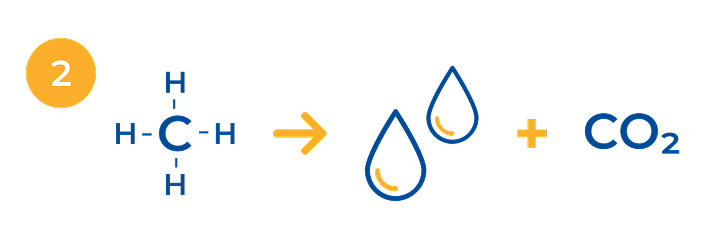
Following sulfur removal, exhaust passes through a methane oxidation catalyst where methane is converted into carbon dioxide and water.
Benefits:

Engineered for Real World Operating Conditions

Methane abatement systems must perform reliably across varying temperatures, loads, duty cycles, and operating environments.
CDTi’s integrated sulfur management and catalyst technologies are engineered to support:

Applications & Markets

CDTi s methane abatement solutions are designed for both new installations and retrofit programs across a broad range of methane-emitting applications.
Stationary Power Generation
Data Centers
Combined Heat & Power (CHP) Systems
Natural Gas Compression & Processing
LNG-Fueled Marine Engines
Industrial Combustion Systems
Microgrids & Distributed Energy Resources
Oil & Gas Infrastructure

Why Partner With CDTi?

CDTi combines catalyst engineering, advanced testing capabilities, coating technology, and manufacturing expertise to support methane abatement programs from development through deployment.
By integrating catalyst engineering and coating expertise under one roof, CDTi helps customers accelerate deployment while reducing technical and operational risk.

Our Capabilities Include:

METHANE ABATEMENT

Built on Decades of Catalyst Expertise

Methane abatement is one of many ways CDTi applies catalyst engineering and coating technology to solve complex industrial and environmental challenges.
Our expertise spans emissions control, power generation, methane oxidation, catalyst coatings, and emerging environmental technologies. By combining development, testing, coating, and manufacturing capabilities, CDTi helps customers deploy solutions engineered for real-world performance and long-term success.

WordPress Cookie Notice by Real Cookie Banner