
Ammonia Slip Catalysts for SCR Systems in Power Generation
Selective catalytic reduction (SCR) systems play a central role in power generation emissions control, reducing NOx by using ammonia as the reductant. With the right ammonia dose, exhaust temperature, and catalyst performance, commercial SCR systems typically reach NOx removal efficiencies of roughly 70 to 90 percent.
An ammonia slip catalyst (ASC) is what lets engineers push that further. Increasing ammonia dosing can drive higher NOx conversion, but the excess ammonia may pass through the SCR catalyst as unreacted NH₃. An ASC, placed downstream, manages that excess NH₃, so the system can pursue stronger NOx reduction without letting ammonia slip become the next emissions concern.
What is Ammonia Slip?
Ammonia slip occurs when NOx conversion is limited by too little ammonia, or when too much ammonia passes through an SCR system as unreacted NH₃.
Why Power Generation Complicates the Balance
Stationary diesel and natural gas engines operate across changing loads, temperatures, and exhaust flow. Some run for long cycles; others sit idle until called into service. Those changes affect both NOx conversion and the ammonia that remains downstream.
An ASC does not replace sound SCR design, dosing control, or validation; it works within the larger emissions strategy. The real question is not whether it reduces ammonia, but how selectively and consistently it performs across the application’s operating window. CDTi works with emissions systems manufacturers and industrial teams on the coated catalyst element behind that performance, for diesel and natural gas applications.
Design Variables That Affect ASC Performance
An ASC has to be evaluated against the upstream SCR system, since dosing strategy, exhaust temperature, NOx targets, catalyst aging, and flow distribution all influence how much NH₃ reaches it.
NH₃ to NOx ratio.
More aggressive dosing supports higher NOx conversion but increases slip risk; conservative dosing limits NOx reduction. ASC technology manages the space between.
Temperature.
The ASC sees different conditions at startup, steady state, transient operation, and aging. A catalyst that performs well in one range may not fit if the generator spends much of its life outside it.
Space velocity and back pressure.
Catalyst volume, cell density, open frontal area, and substrate geometry all shape performance. Higher flow reduces residence time, affecting conversion and pressure drop, and stationary power has limited tolerance for exhaust restriction.
Durability and flow distribution.
Thermal aging, chemical exposure, and operating cycles change catalyst behavior over time. Uneven ammonia distribution creates overdosing and underdosing across the catalyst face, affecting both SCR performance and the ASC’s workload.
These variables are connected, which is why ASC development should be evaluated around the actual operating environment rather than treated as standard component selection.
Why Selectivity Matters
ASC technology is sometimes described as simply removing ammonia. The more complete question is what the ammonia becomes. Poor selectivity can increase NOx or N₂O under certain conditions, and N₂O is a potent, long-lived greenhouse gas, so conversion efficiency cannot be the only measure. A catalyst with strong oxidation activity may still create problems if it contributes to another emissions concern.
CDTi uses analytical characterization to evaluate this: XRF for chemical composition, BET for surface area and pore structure, XRD for crystalline phases, TPR and TPO for reduction and oxidation behavior, flow reactor testing for activity under defined conditions, and rapid aging to test whether early performance holds up.
These results can change the catalyst decision, because ASC development has to balance activity, selectivity, and durability together.
Catalyst Formulation, Substrate, and Coating Decisions
Formulation and Substrate
ASC performance starts with material decisions. Formulation affects activity, selectivity, durability, and cost, and may involve precious metal catalysts, base metal catalysts, or combinations.
Substrate selection is equally important: material, geometry, cell density, and wall structure influence pressure drop, thermal response, coating adhesion, durability, and available surface area.
A late substrate change can affect washcoat optimization, catalyst loading, durability, pressure drop, and manufacturability.
Coating and Packaging
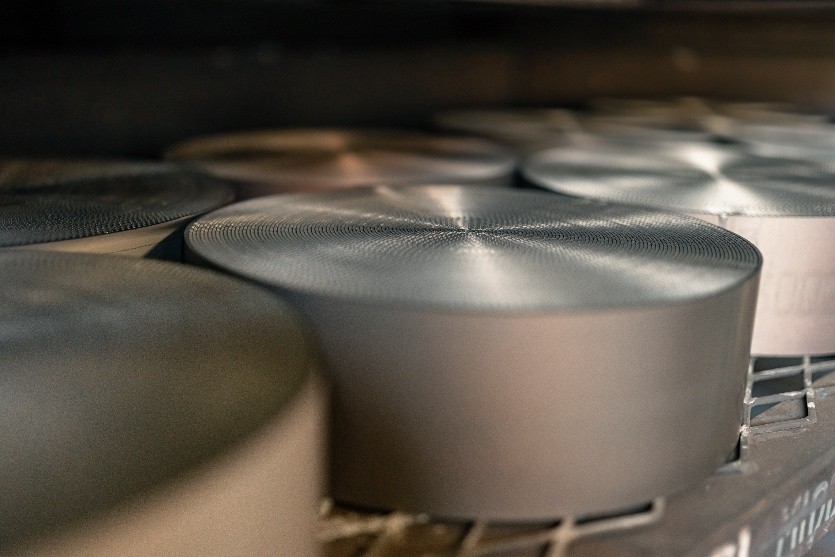
Uneven coating influences flow, pressure drop, and local reaction behavior, and zone loading may be used when the application needs different activity profiles across the element. Power generation adds packaging constraints: available space, housing design, and exhaust flow path may limit catalyst volume or geometry, and a new system allows more
flexibility than a retrofit working within existing limits. CDTi brings formulation, substrate compatibility, and coating into the same conversation through its catalyst coating services, available as custom-coated elements for new and existing housings.
Moving ASC Design from Theory to Application
ASC performance is highly application-dependent. Fuel type, exhaust composition, operating hours, temperature profile, packaging, regulatory targets, and upstream SCR strategy all influence the right design.
Off-the-Shelf or Application-Specific
An off-the-shelf selection may suit a well-understood operating window. More demanding applications call for a closer look at NH₃ slip limits, NOx targets, inlet temperature, space velocity, pressure drop tolerance, aging, and dosing strategy, and validation should reflect real duty cycles, since a continuous-power engine sees a different profile than a standby generator.
This is where ASC technology earns its place: it gives engineering teams room to dose ammonia more aggressively for higher NOx conversion while keeping downstream slip in check. CDTi works with technical teams on the catalyst decisions behind that performance, formulation, substrate compatibility, analytical testing, coating execution, and production.
Talk with CDTi about catalyst development for your power generation emissions control application.