
What is a three-way catalyst?
A catalyst that controls NOx, CO, and hydrocarbons from rich-burn and stoichiometric natural gas engines in one system, converting all three pollutants using exhaust chemistry that stays close to the stoichiometric operating point.
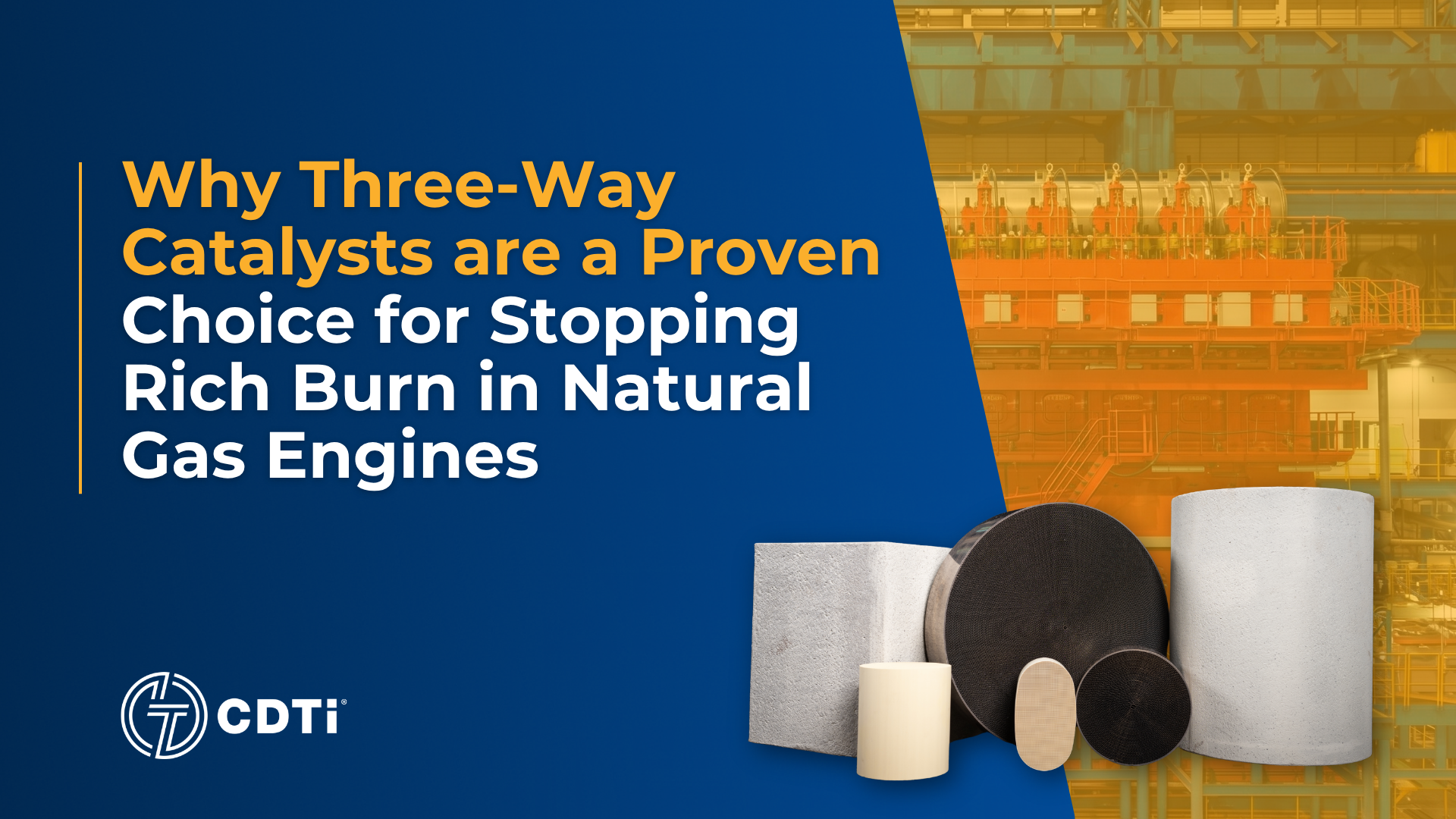
Three-way catalysts are a proven choice for controlling NOx, CO, and hydrocarbons from rich burn and stoichiometric natural gas engines. The chemistry is well understood. The challenge is developing a catalyst that performs under the actual conditions of a power generation engine.
Those conditions change with the application and with engine operation. Load affects the exhaust stream. Temperature and flow can shift as operating demands change. Air fuel control determines whether the catalyst stays within the narrow range needed for simultaneous NOx reduction and CO and hydrocarbon oxidation.
CDTi works with engine manufacturers and integrators to develop catalyst solutions around these operating requirements.
Why Three-way Catalysts Work for Rich and Stoichiometric Engines
How do three-way catalysts work on rich-burn and stoichiometric engines?
Three-way catalysts convert NOx, CO, and hydrocarbons at the same time by holding the engine’s exhaust close to the stoichiometric air fuel ratio, where oxygen storage materials buffer short swings so reduction and oxidation reactions happen together.
Three-way catalysts depend on exhaust chemistry that stays close to stoichiometric operation. This creates the balance needed to reduce NOx while oxidizing CO and hydrocarbons within the same catalyst.
Small changes in air fuel ratio can shift that balance. Excess oxygen favors oxidation but makes NOx reduction more difficult. Richer conditions support NOx reduction but leave less oxygen available for oxidation. Maintaining control near stoichiometry is therefore central to catalyst performance.
Oxygen storage materials can help manage short changes around that operating point. They temporarily store oxygen when more is available and release it as the exhaust becomes richer. Their role is especially important when the engine moves back and forth around stoichiometry during normal control.
For catalyst developers this means performance cannot be evaluated apart from the engine. The formulation has to work with the exhaust environment the engine actually produces.
Start with the Engine and Operating Conditions
Catalyst development starts with a clear picture of what is coming out of the engine. Engine out emissions show how much NOx, CO and hydrocarbons the catalyst will need to address. Engineers also need to understand how closely the air fuel ratio can be controlled and how exhaust temperature and flow change across the operating range.
Flow becomes particularly important when catalyst volume is considered. The relationship between exhaust flow and catalyst volume affects space velocity and the time available for catalytic reactions.
The physical system adds another set of constraints. Available space may limit catalyst size or geometry. Pressure drop requirements can influence substrate selection. The emissions target ultimately defines how much conversion the catalyst needs to deliver.
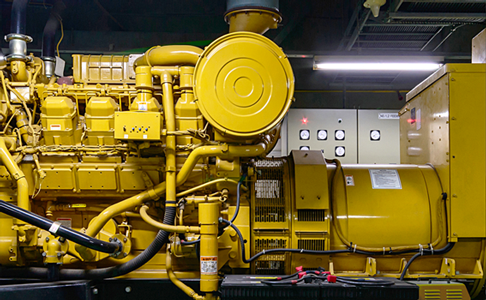
CDTi develops custom catalyst formulations for natural gas engines used in power generation and other industrial applications. The development work can be built around the operating requirements of the engine rather than starting with a standard catalyst configuration.
Formulation, Substrate, and Coating
The formulation needs to deliver the required activity within the engine’s operating range. Precious metal requirements are part of that work. Oxygen storage materials also need to be considered for their role in supporting Three-way catalyst chemistry near stoichiometry.
Substrate decisions are closely connected to the formulation. Geometry and cell density influence how exhaust moves through the catalyst and can affect pressure drop. The substrate also provides the surface that carries the catalytic coating.
CDTi works with metallic and ceramic substrates, as well as other engineered substrate architectures. Its coating capabilities support different geometries, cell densities, and catalyst formulations.
The coating process has to translate the catalyst design onto the selected substrate with the required loading and consistency. What works at the formulation stage still has to be practical to coat and repeatable as the program advances.
Bringing formulation and coating development together gives CDTi the ability to evaluate those decisions as part of the same program. A change to the substrate can be considered alongside its effect on coating and catalyst performance rather than treated as an isolated decision.
Testing and Characterization
What tests does CDTi use to characterize a three-way catalyst?
- XRF for chemical composition
- BET for surface area and pore volume
- XRD for crystalline phases
- Temperature-programmed reduction and oxidation for redox behavior
- Flow reactor testing with dynamic oxygen storage capacity measurement
Emissions results tell engineers whether a catalyst reached its target. Characterization helps them understand why it performed the way it did.
CDTi uses XRF to analyze chemical composition. BET provides surface area and pore volume data. XRD can identify crystalline phases in catalyst materials. Temperature programmed reduction and oxidation testing provides information about redox behavior.
Flow reactor testing gives engineers a controlled environment for evaluating catalytic activity. CDTi can also measure dynamic oxygen storage capacity. That capability is directly relevant to Three-way catalyst development because oxygen storage behavior influences how the catalyst responds as exhaust chemistry changes around stoichiometry.
Development does not stop with initial activity. CDTi also conducts rapid aging tests along with catalyst poisoning and failure analysis. These tools can help engineering teams investigate changes in performance and determine whether formulation or coating adjustments should be considered.
The objective is not testing for its own sake. The data should help answer a development question and guide the next decision.
From Development to Production
A catalyst that performs well during development still has to be produced consistently. Prototype coating provides an opportunity to evaluate the formulation on the selected substrate before production volumes increase. It can reveal processing issues that may not be apparent during formulation work alone.
As the program advances, the focus shifts toward repeatability. Catalyst loading and coating quality need to remain controlled from one substrate to the next. The production process also needs to preserve the characteristics established during development.
CDTi supports catalyst programs through development, testing, rapid prototyping, process customization and production scale coating. Keeping these capabilities within the same organization helps carry the knowledge gained during development into the production process.
Bringing the Catalyst and Engine Together
Three-way catalyst development for a rich burn or stoichiometric power generation engine starts with understanding how that engine operates. Exhaust chemistry and air fuel control define the reaction environment. Temperature and flow shape the conditions the catalyst will see in service. The formulation, substrate and coating then have to work within those requirements.
CDTi works with engine manufacturers and integrators throughout that process. Its catalyst development, characterization, testing and coating capabilities support programs from early evaluation through production.
Developing a catalyst solution for a rich-burn or stoichiometric natural gas engine? Contact CDTi to discuss your application and emissions requirements.